
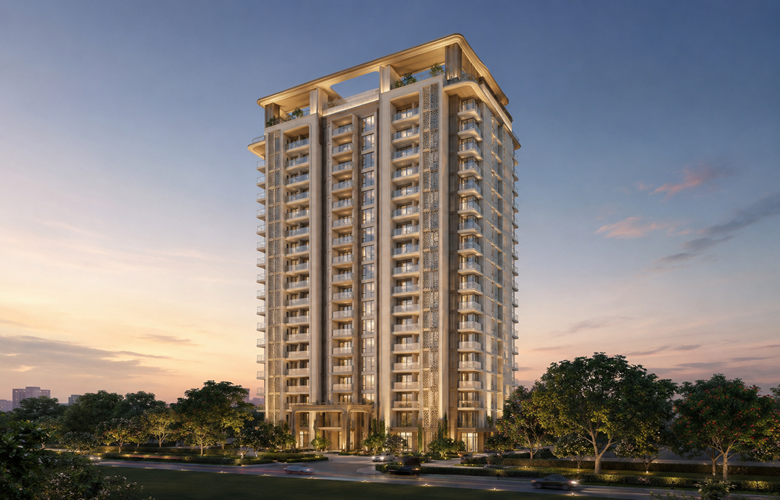
India had an estimated 162.2 million people aged 60-plus in 2025, yet only about 22,157 organised senior living units nationwide, per ASLI and JLL India. That gap roughly one unit for every 7,300 seniors is reshaping retirement living in India, and it explains every trend in this guide.
Key Takeaways
- India’s organised senior living market is valued at about ₹25,000 crores and could grow roughly 5x to ~USD 12 billion by 2030 (Colliers).
- Supply: 22,157 organized units. Demand: 18-20 lakh units today (Colliers); 2.3 million units needed by 2030 (industry estimates).
- South India holds 60% of supply (JLL-ASLI). Delhi NCR, led by Gurgaon’s Golf Course Extension Road, is the fastest-emerging northern hub.
- Hospital-partnered communities are the new benchmark: DLF The Aureva in Sector 63 Gurgaon pairs a 22-bed on-site medical facility with Medanta.
- MahaRERA’s May 2024 guidelines are India’s first dedicated retirement-housing rules, a likely national template.
What Retirement Living in India Actually Means Today
Retirement living in India has quietly split into two different products, and families often confuse them. The first is the traditional retirement home, typically charitable or rented, with shared facilities and basic care. The second is the organised senior living community: a RERA-registered residential project you buy or lease, built to age-friendly design codes, with on-site medical support, housekeeping, dining and a managed social calendar.
The second category is where nearly all the growth is. And it behaves like real estate, not like eldercare.
That distinction changes how a family should evaluate it. You are not choosing a facility. You are choosing a home, a healthcare backstop and a community usually for a 15-25-year horizon.
Why 2026 Is a Turning Point for Senior Housing
Three numbers frame the moment. India’s 60-plus population reached an estimated 162.2 million in 2025, according to ASLI and JLL India. Colliers projects the share of seniors will rise from about 11% of the population in 2024 to 21% by 2050. By comparison, the country’s entire organized senior living stock stands near 22,157 units.
Here is the market in one table:
| Indicator | Figure | Source |
|---|---|---|
| Population aged 60+ (2025) | 162.2 million | ASLI & JLL India |
| Organised senior living supply | 22,157 units | ASLI & JLL India |
| Current estimated demand | 18-20 lakh units | Colliers |
| Units needed by 2030 | 2.3 million | Industry estimates |
| Market size today | ₹25,000 crore | Colliers |
| Projected market by 2030 | USD 12 billion (5x) | Colliers |
| Projected demand value, 2030 | ₹64,500 crore | Anarock |
| Share of supply in South India | 60% | JLL–ASLI |
Read The table honestly, and one conclusion follows: for the next several years, well-run senior living projects will be scarcer than the families who want them. Scarcity shapes everything below.
Demand Has Outrun Supply, by a Factor of 80
Colliers pegs current demand at 18-20 lakh units against roughly 22,000 delivered, a gap of about 80 to 90 times. Mordor Intelligence expects the market to compound at 25.92% a year between 2026 and 2031, faster than almost any traditional real estate segment.
For a family, the practical meaning is simple: the best-located projects sell early, and waiting for ‘more options to come up’ usually means choosing from what remains, at higher prices. This is the single hardest mental shift, treating a parent’s home as a decision with a deadline.
The Market Is Moving North, and Gurgaon Is Leading
For two decades, senior living in India meant Coimbatore, Chennai, Bengaluru, Kochi and Pune; the south still holds around 60% of organized supply, per the JLL-ASLI research. That geography is now changing.
Delhi NCR has become the most watched northern market, and Gurgaon’s Golf Course Extension Road is its centre. The reason is a rare overlap: multi-specialty hospitals (Medanta, Fortis, Artemis within a short drive), a large base of affluent families whose parents live elsewhere, and now branded developers entering the category. DLF’s first senior living development, DLF The Aureva in Sector 63, is situated inside the 25-acre DLF Arbor campus on this corridor, with a dedicated 5-acre senior living zone. When India’s largest listed developer enters a segment, the segment has arrived.
Colliers’ 2026 outlook adds a second layer: Tier II cities such as Coimbatore, Kochi, Surat and Panaji, and spiritual hubs like Vrindavan and Ayodhya, are drawing new supply. But for families who want parents close by, not two flights away, the metro-corridor projects matter most.
Healthcare Inside the Gate Is the New Baseline
Ask families what changed their shortlist and one answer repeats: emergency response time. A community 20 minutes from a hospital and a community with doctors on campus are different products at 3 a.m.
The market has responded. New launches increasingly bundle on-site medical infrastructure with a named hospital partner. Aureva’s model is a 22-bed medical facility on campus, developed in partnership with Medanta; with 24/7 emergency response, it is the clearest NCR example, and competing projects are now measured against it. Expect hospital tie-ups to become as standard in senior living brochures as clubhouses are in regular housing.
Adult Children Especially NRIs Are Driving the Decision
The buyer has changed. Increasingly, the first enquiry comes from a son or daughter in Singapore, Dubai, London or the Bay Area, and the parents join later. Colliers notes rising NRI interest in senior living across Delhi NCR, Bengaluru, Hyderabad and Kerala, with buyers treating these homes as safe, managed, community-driven housing for parents.
The mechanics help: NRIs can buy under the same FEMA framework as any residential property, pay from NRE/NRO accounts, and complete most of the process remotely. What the NRI child is really buying is not square footage. It is the sentence: ‘If something happens at 3 a.m., there are doctors on campus.’
Regulation Is Finally Catching Up
Senior living Community Gurgaon. sold as apartments already falls under state RERA like any project. The bigger shift came in May 2024, when MahaRERA issued India’s first dedicated guidelines for retirement housing, covering design standards, safety features and care obligations. Analysts widely expect the framework to become a national template.
For families, the checklist is unchanged but sharper: verify the project on the state RERA portal (for Gurgaon projects, HARERA Gurugram), confirm the declared possession date, and get the care-services agreement in writing, not just the sale deed.
Homes Are Getting Bigger, Not Smaller
Existing supply skews compact; independent-living units make up 84% of stock and 2 BHKs about 43%, per JLL. New launches are moving the other way. At the top end, The Aureva offers around 172 residences of 4,200 sq.ft. (super area), 4 bedrooms plus utility among the largest senior living apartments in the NCR.
The logic is generational. Today’s 60-somethings are not downsizing out of necessity; many are upgrading into homes where children and grandchildren can stay over. Space, in this category, is a feature of dignity.
The Mistakes Families Still Make
- Treating it as an old-age-home decision. Organized senior living is ownership housing with services; evaluate the developer, the operator, and the medical partner separately.
- Comparing only on price per sq ft. Monthly charges, care fees, and what happens when needs change matter more over a 20-year horizon.
- Skipping the regulator check. Always confirm RERA registration and possession timelines on the official portal before paying a booking amount.
- Deciding for the parents instead of with them. The projects with the happiest residents are the ones the residents chose. Visit together.
- Waiting for ‘more supply’. With 22,000 units against demand in the lakhs, the best inventory in a given corridor rarely waits.
Expert Voice
What We Are Seeing on the Ground in Sector 63
Our advisory desk has tracked Golf Course Extension Road daily through 2025 and 2026, and the change in senior living enquiries is unmistakable. Three quarters ago, most questions came from seniors themselves. Today the first call usually comes from a son or daughter, often dialling from Singapore, Dubai or the US, and the parents join the second call. The first question is almost never price. It is medical response.
One family we advised recently made the pattern vivid. A Singapore-based finance professional shortlisted three NCR options for his parents in Q2 2026. Apartment sizes were comparable; prices were within 10% of each other. What decided it was a named hospital behind the on-campus medical facility, and his parents’ firm wish to stay 20 minutes from their grandchildren in Gurgaon rather than move to a township outside the city.
Since DLF opened inquiries for The Aureva inside the Arbor campus, we have also watched expectations reset across the corridor: projects without a hospital partnership now struggle to hold a family’s attention past the first meeting. That, more than any brochure, tells you where this category is headed.
“The question families asked in 2020 was ‘why senior living?’ The question in 2026 is ‘which one and how early do we need to decide?’” The Aureva Gurgaon Advisory Desk
Final Thoughts:
Retirement Living in India: The Bottom Line for Your Family
The senior housing decision has moved from the margins of Indian family life to its centre, and the data says the window for easy choices is narrowing.
- Supply is the story: 22,157 organised units against demand of 18-20 lakh means well-located projects will stay scarce for years.
- Geography is shifting: the south holds 60% of stock, but NCR especially Sector 63 and Golf Course Extension Road, is where the newest benchmark projects are launching.
- Judge healthcare first: a named hospital partner and on-campus medical response now separate serious projects from the rest.
- Verify before you book: state RERA registration, possession dates and the care-services agreement, in writing, every time.
If your family is weighing options in the NCR, a good next step is a joint site visit, parents and children together. You can see how the new benchmark looks in person at DLF The Aureva Gurgaon, and request the current price list through the enquiry form on this site.
Read more: Senior Living in Gurgaon: GCER’s New Wellness Hub 2026
Frequently Asked Questions About Retirement Living in India
What is retirement living in India?
Retirement living in India refers to purpose-built residential communities for people aged 55 or 60 and above, combining private apartments with healthcare support, emergency response, housekeeping, dining, and social activities. Unlike old-age homes, residents own or lease their homes and live independently, with medical and lifestyle services available on campus whenever needed.
How much does senior living cost in India?
You can expect entry-level senior living apartments in Tier II cities from around ₹40-60 lakh, mid-segment metro projects between ₹1-3 crore, and luxury communities considerably higher. DLF The Aureva in Sector 63 Gurgaon, for example, offers 4,200 sq.ft. (super area) residences priced upwards of roughly ₹11.7 crore at launch.
What is the difference between a retirement home and a senior living community?
A traditional retirement home is usually a charitable or rented facility offering basic shared accommodation. A senior living community is a professionally managed residential project where you buy or lease your own apartment, with age-friendly design, on-site medical support, concierge services, and clubhouse amenities, closer to a serviced residence than an institution.
Can NRIs buy senior living apartments in India for their parents?
Yes. NRIs can purchase senior living apartments under the same FEMA framework that applies to standard residential property, using NRE or NRO accounts, with no additional approvals required. Colliers notes growing NRI interest in senior living across Delhi NCR, Bengaluru, Hyderabad, and Kerala, driven by safety, managed services, and healthcare access for parents.
Are retirement homes in India regulated by RERA?
Senior living projects sold as apartments fall under the state RERA where they are located, just like any residential development. In May 2024, MahaRERA issued India’s first dedicated guidelines for retirement housing, covering design, safety, and care standards. You should always verify a project’s registration on the official state RERA portal before booking.
Which Indian cities are best for retirement living?
Southern cities Coimbatore, Chennai, Bengaluru, Kochi and Pune in the west hold roughly 60% of India’s organised senior living supply, per JLL and ASLI. Delhi NCR, led by Gurgaon’s Golf Course Extension Road, is now the fastest-emerging northern hub, backed by branded developers, multi-specialty hospitals, and strong NRI family networks.
What should families check before choosing a senior living project in India?
Check six things: the developer’s delivery track record, RERA registration status, the medical partner and emergency response setup, monthly maintenance and care charges, exit and resale rules, and the age profile of the community. Visit the site together, and ask how the operator handled emergencies in its existing projects before you commit.
What is DLF The Aureva in Sector 63 Gurgaon?
DLF The Aureva is DLF’s first senior living development, set on a dedicated 5-acre zone inside the 25-acre DLF Arbour campus on Golf Course Extension Road, Sector 63 Gurgaon. It offers around 172 residences of 4,200 sq.ft. (super area) with a 22-bed on-site medical facility developed in partnership with Medanta.

Arman Khan
Arman Khan is a Real Estate Market Analyst and SEO Content Strategist specializing in luxury residential projects across Gurgaon, Delhi NCR, Dubai, and other high-growth property markets. He creates data-driven property guides, launch analyses, price trend reports, and investment insights backed by market research and verified developer information. His content helps homebuyers and investors make informed decisions by simplifying complex real estate data into practical, user-focused insights.