
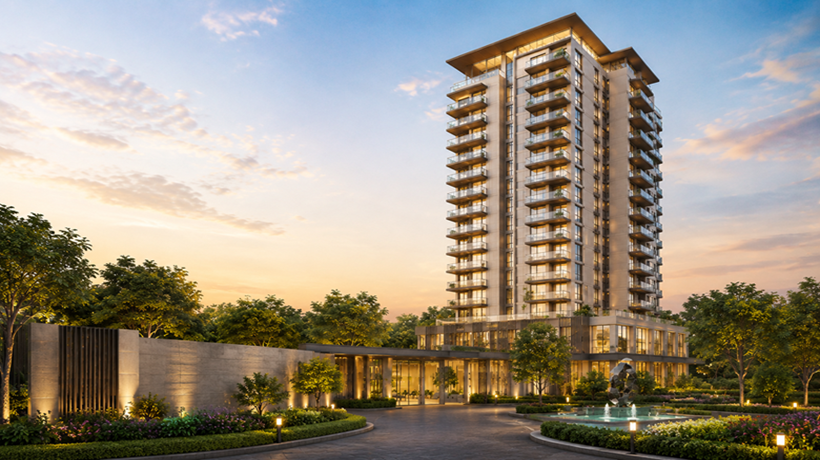
If you have been tracking real estate in Gurgaon for the past few years, you already know that Sector 63 is no longer the “upcoming” area people once talked about. It has arrived. Property prices here have crossed ₹25,000 per sq.ft. in some projects, and the momentum does not look like slowing down anytime soon.
But what exactly is pushing prices upward in this particular sector? Why are buyers willing to pay a premium here compared to Sector 65, Sector 67, or even parts of New Gurgaon? And most importantly, is Sector 63 still a smart place to put your money in 2026?
This blog breaks down every factor influencing property prices in Sector 63 Gurgaon right now: location advantages, the infrastructure play, key projects, honest pros and cons, and a real comparison with neighbouring sectors. Whether you are an end-user looking for a home or an investor calculating ROI, this is the ground-level picture you need before making a decision.
Why Sector 63 Gurgaon Is Getting So Much Attention
Sector 63 is situated right along Golf Course Extension Road, which is arguably the most premium residential corridor in Gurgaon today. This is not some far-flung sector on the edge of the city. It is sandwiched between established areas, close to Cyber City on one side and connected to Sohna Road and NH-48 on the other.
The big shift happened when major developers like DLF and Adani launched large-scale luxury projects here. Once DLF brought The Arbour to Sector 63 and sold out unit’s worth over ₹8,000 crores within three days of its pre-launch, the market signalled very clearly that this sector had entered the big leagues.
Today, the sector has a mix of ultra-luxury high-rises, premium builder floors, and gated communities. That variety of housing stock, combined with genuine infrastructure development, is what keeps prices climbing year after year.
The Key Factors Driving Property Prices in Sector 63
1. Golf Course Extension Road Connectivity
This is the single biggest price driver for Sector 63. Golf Course Extension Road (GCER) connects the sector directly to Golf Course Road, Southern Peripheral Road (SPR), Sohna Road, and NH-48. For professionals working in Cyber City, Udyog Vihar, or the DLF Cyber Hub belt, the commute from Sector 63 is genuinely short and predictable.
This road connectivity is not just about getting to work. It puts residents within easy reach of top hospitals like Artemis, schools like Shiv Nadar School and DPS International Edge, shopping destinations like AIPL Joy Square and Bestech Central Mall, and entertainment zones across the Golf Course Road corridor. Daily life is simply more convenient when your sector sits on a premium arterial road, and that convenience directly translates to higher property valuations.
2. The DLF Effect and Developer Credibility
When DLF, the most recognised name in Gurgaon real estate, picks a location for an ultra-luxury project, it changes the perception of the entire micro-market. DLF The Arbour is spread across 25 acres with only 5 towers and around 1,137 to 1,338 units, which is very low density for a project of this scale. The 4 BHK apartments start upward of ₹9 crores, and the per sq.ft. rate moved from ₹24,500 to around ₹26,750 just in the first quarter of 2026, a jump of over 9 percent in three months.
This kind of price movement in a single flagship project pulls up the average rates across the entire sector. Buyers and investors see DLF pricing as a benchmark. When the benchmark moves, everything around it adjusts upward.
The upcoming DLF The Aureva, Senior Wellness Residences further strengthens this credibility in Gurgaon’s premium residential market. With its RERA registration received ahead of the upcoming launch, the project adds another high-end DLF offering to the evolving luxury and senior-living segment. The combination of DLF’s established developer reputation, regulatory approval and a wellness-focused residential concept could further reinforce buyer confidence in the surrounding micro-market. For investors, the launch is particularly significant because a new DLF benchmark at the premium end can influence both pricing expectations and the perceived investment value of nearby residential developments.
3. Adani’s Multi-Phase Township
Adani Realty has built an entire township ecosystem in Sector 63 through the Samsara Brand: Samsara Vilasa, Samsara Ivana, and Samsara Avasa. These projects cater to different buyer segments. Vilasa offers 3 and 4-BHK independent floors starting around ₹2.3 crore. Ivana targets the upper segment with 4 BHK luxury floors at ₹5.2 crore and above, priced around ₹26,000-27,000 per sq.ft. Avasa offers premium low-rise apartments with possession expected by late 2026.
When two heavyweight developers, DLF and Adani, both invest heavily in the same sector, it creates a virtuous cycle. Infrastructure improves, commercial interest follows, more amenities come in, and buyer confidence in the location goes through the roof.
4. Upcoming Metro Connectivity
This is a big one for future price appreciation. The Haryana government has approved a 35-36 km metro extension that will eventually connect GCER sectors (including the Sector 56-63 belt) through SPR all the way to Pachgaon. The state budget for 2025-26 allocated ₹2,000 crores for infrastructure upgrades along this stretch.
Now, to be fair and honest, this metro line is still at the DPR (Detailed Project Report) stage for the GCER section. It is not under active construction yet. The nearest functional metro stations today are Sector 54 Chowk and Sector 55-56, which are about 5 km or 10-12 minutes by car from Sector 63. So if you need walk-to-metro access today, this sector does not deliver that.
But here is the thing about real estate pricing: markets price in future infrastructure well before it actually arrives. The moment the metro approval becomes concrete with a timeline, expect another 10-15 percent jump in prices across Sector 63 and its neighbours.
5. Limited Land Availability
Unlike New Gurgaon sectors (80s, 90s, and beyond) where there is still plenty of open land and ongoing construction, Sector 63 is running out of space. Most of the prime plots have been picked up by established developers. This scarcity factor naturally pushes prices higher because new supply cannot match the demand that the sector’s location generates.
6. Strong Rental Demand
Sector 63’s proximity to major employment hubs means there is consistent rental demand from working professionals, especially those in senior and mid-senior roles at MNCs in Cyber City and along Golf Course Road. Rental yields in the luxury segment here average around 2-4 percent annually. Monthly rents range from ₹33,000 for a basic apartment to well over ₹70,000 for a premium unit.
While rental yields in Gurgaon are not spectacularly high compared to some other investment avenues, the combination of rental income plus capital appreciation is what makes the total return attractive for investors.
7. Social Infrastructure and Lifestyle
Beyond just roads and buildings, Sector 63 scores well on day-to-day livability. There are parks and green spaces, the sector is well-lit with good security perception among residents, and there is access to healthcare, education, retail, and dining without having to drive long distances. Projects here come with clubhouses, swimming pools, gyms, sports courts, and landscaped gardens that create a community feel rather than just a housing complex.
This lifestyle quotient adds intangible value to the location. Families with children, retired professionals, and NRIs particularly value these aspects when choosing a sector to buy in.
Honest Pros and Cons of Buying in Sector 63 Gurgaon
Before you make any decision, you need to see the full picture, not just the marketing brochure version.
Pros
Premium location on GCER. This is not a peripheral sector. You are on one of Gurgaon’s top three roads, with direct access to commercial hubs, hospitals, schools, and highways.
Reputed developers. DLF, Adani, and other known builders have invested here. This reduces the risk of project delays, poor construction quality, or RERA non-compliance issues that plague many sectors in New Gurgaon.
Consistent price appreciation. Sector 63 has recorded roughly 8-12 percent year-on-year appreciation depending on the project and data source. That is significantly higher than many neighbouring sectors.
Diverse housing options. From ultra-luxury apartments (DLF The Arbour) to premium builder floors (Adani Samsara Vilasa) to low-rise communities (Samsara Avasa), there is a range of options across budgets, though “budget” here still means crores.
Future metro connectivity. The approved metro extension plan, once executed, will add a significant boost to both convenience and property values.
Strong resale market. Because of the developer brands and location strength, properties in Sector 63 tend to have a healthier resale market compared to lesser-known sectors with smaller builders.
Cons
High entry price. This is not a sector for first-time buyers or those with a budget under ₹1.5 crore. The average price of ₹18,000-25,000+ per sq.ft. puts even a 3 BHK well into the multi-crore range.
No metro access today. The nearest metro stations are a 5 km drive away. If you depend on public transport, this is a real limitation right now.
Construction activity in surrounding areas. Sectors around 63, especially 63A, still have ongoing construction. This means dust, noise, and the general inconvenience that comes with a developing neighborhood.
Lower rental yield compared to mid-segment areas. While rents are high in absolute terms, the yield as a percentage of property value (around 2-4 percent) is lower than what you might get in sectors like 82 or 89 in New Gurgaon, where property costs are lower.
Premium maintenance costs. Luxury projects come with luxury maintenance bills. Clubhouse fees, society maintenance, parking charges, and property taxes in this segment can run into ₹15,000-₹30,000 or more per month depending on the project.
Sector 63 vs Other Sectors, Where Does It Stand?
Let us put Sector 63 in context by comparing it with nearby sectors that buyers often evaluate together.
Sector 63 vs Sector 65
Sector 65 is also on the GCER corridor and has its share of premium projects. The average price here is around ₹20,000 per sq.ft. about 15-20 percent lower than Sector 63. Year-on-year appreciation in Sector 65 is around 2-3 percent, which is noticeably slower than the 6-8 percent that Sector 63 has been delivering. If you want a similar location profile at a slightly lower price point and are comfortable with slower appreciation, Sector 65 works. But for capital growth potential, Sector 63 has the edge.
Sector 63 vs Sector 57
Sector 57 is a more established, older residential area with rates averaging around ₹13,200-14,600 per sq.ft. It saw a sharp 18 percent YoY jump recently, likely a catch-up correction after years of stagnation. The social infrastructure is decent, but the housing stock is older, and the area lacks the luxury developer presence that defines Sector 63. Sector 57 suits buyers looking for affordable entry into the Golf Course Road belt. But for long-term premium appreciation, it cannot match 63.
Sector 63 vs Sector 62
Sector 62 is a close neighbour with average flat rates around ₹20,750 per sq.ft. Emaar’s Urban Oasis is a notable project here. The appreciation rate is moderate, around 4-5 percent YoY. Sector 62 is a solid residential choice, but it does not have the concentration of ultra-luxury projects or the developer firepower that Sector 63 commands. Think of 62 as the quieter, slightly more affordable cousin.
Sector 63 vs New Gurgaon (Sectors 80-95)
New Gurgaon sectors offer significantly lower entry prices, ranging from ₹4,500 to ₹8,000 per sq.ft. in many areas. Developers like Signature Global, M3M, and Smart World are active here. The appreciation potential is high in percentage terms because the base price is low. But these sectors come with real risks: ongoing construction everywhere, infrastructure still being built out, longer commute times to established office hubs, and a less predictable delivery timeline from some builders.
Sector 63 costs more, but you are paying for established infrastructure, proven developers, and a location that does not require you to wait five years for the neighbourhood to “develop.” For end-users who want to move in within a year or two, that difference matters a lot.
Sector 63 vs Sector 63A
Despite the similar naming, Sector 63A is a different micro-market. Prices here are around ₹15,000-15,300 per sq.ft. Almost 40 percent lower than Sector 63. Projects like Signature Global Prime are present here. However, 63A is more car-dependent, has an even larger metro gap, and the neighbourhood is still maturing. It is a decent value pick for patient investors, but it does not offer the same immediate livability or brand-name project options as Sector 63.
ROI Potential and Growth Outlook, A Realistic View
Let us talk numbers honestly. Here is how the ROI picture shapes up for Sector 63 compared to competing areas.
Capital Appreciation Track Record
Sector 63 properties have appreciated roughly 8-12 percent per year over the last couple of years, depending on the specific project. DLF The Arbour alone saw a 9 percent price jump in a single quarter of 2026. Adani Samsara Vilasa recorded about 3.4 percent appreciation per quarter in early 2026. Over a 3-5 year holding period, investors in Sector 63 have seen strong and relatively consistent returns.
For context, Sector 65 delivered about 2-3 percent YoY. Sector 67 managed around 4-5 percent YoY. Sector 62 came in around 4-5 percent. New Gurgaon sectors like 82 and 89 have seen higher percentage jumps in some periods, but from a much lower base and with higher delivery and infrastructure risk.
Rental Yield Comparison
Rental yield in Sector 63 sits at around 2-4 percent for luxury apartments. That translates to monthly rents of ₹33,000 to ₹70,000+ depending on the unit size and project. In comparison, mid-segment sectors in New Gurgaon might offer 3-4 percent yield, but on a property that may not appreciate as fast and may have liquidity issues when you try to sell.
The total return in Sector 63, rental income plus appreciation combined is one of the strongest along the entire GCER corridor.
Final Thoughts
Sector 63 Gurgaon has moved past the “promise” stage and into the “proven” category. The combination of Golf Course Extension Road frontage, DLF and Adani project presence, growing social infrastructure, and upcoming metro plans makes it one of the strongest residential micro-markets in all of NCR right now.
Prices are high; there is no getting around that. But they are high for genuine reasons: location, developer quality, infrastructure, and limited future supply. For buyers who can afford the entry ticket, Sector 63 offers a combination of lifestyle quality and investment security that very few sectors in Gurgaon can match today.
If you are seriously evaluating a property purchase along Golf Course Extension Road, do your own due diligence on the specific project, check RERA registration, verify possession timelines, and visit the site in person. The numbers favour Sector 63, but like any real estate decision, the right unit in the right project at the right price is what will ultimately determine your returns.
Thinking of investing in Sector 63 Gurgaon? Get in touch for expert guidance on the best projects, pricing analysis, and investment strategy tailored to your goals.
Read more aur all blogs:
1 – Luxury Senior Living in Gurgaon
2 – Best Senior Living Communities in Gurgaon
3 – Senior Living vs Traditional Apartments in Gurgaon
4 – Senior Living in Gurgaon: Complete Guide
5 – Choose The Best Senior Living Homes in Gurgaon
6 – Luxury Retirement Homes Gurgaon
7 – Senior-Friendly Homes in Gurgaon
What Could Push Prices Even Higher?
There are a few catalysts that could accelerate price growth in the next 2-3 years. The metro extension getting a confirmed construction timeline would be the biggest one. Completion of SPR widening and elevated road projects currently approved with a ₹900 crore allocation will further improve commute times. More commercial development along GCER, including retail and office spaces, would add employment density and drive up housing demand. And finally, as DLF The Arbour approaches its possession date around 2027-2030, the ready-to-move premium will kick in and lift resale values across the sector.
What Could Hold Prices Back?
A broader slowdown in the luxury housing market, driven by interest rate hikes or economic uncertainty, could slow things down. If the metro extension gets delayed significantly (which is entirely possible given India’s infrastructure track record), some of the future pricing built into current rates could stagnate. And if New Gurgaon sectors develop faster than expected with metro connectivity, completed roads, and competitive pricing, some buyer demand could shift away from the GCER corridor.
Who Should Buy in Sector 63 Gurgaon?
This sector is best suited for a specific type of buyer. If you are a working professional or business owner with a budget of ₹2 crore or above, looking for a home in a well-established area with strong connectivity to Gurgaon’s office hubs, Sector 63 makes a lot of sense. If you are an NRI looking for a safe, branded investment with low risk and reliable appreciation, this is one of the safest corridors in Gurgaon. And if you are an investor with a 3-5-year horizon and a willingness to put in a higher upfront amount in exchange for steady, lower-volatility returns, the numbers here work.
This sector is not the right fit if you are looking for budget housing under ₹1 crore, if you need immediate metro access for a daily commute, or if you are looking for maximum percentage returns on a low investment; for that, New Gurgaon sectors will serve you better.

Arman Khan
Arman Khan is a Real Estate Market Analyst and SEO Content Strategist specializing in luxury residential projects across Gurgaon, Delhi NCR, Dubai, and other high-growth property markets. He creates data-driven property guides, launch analyses, price trend reports, and investment insights backed by market research and verified developer information. His content helps homebuyers and investors make informed decisions by simplifying complex real estate data into practical, user-focused insights.